
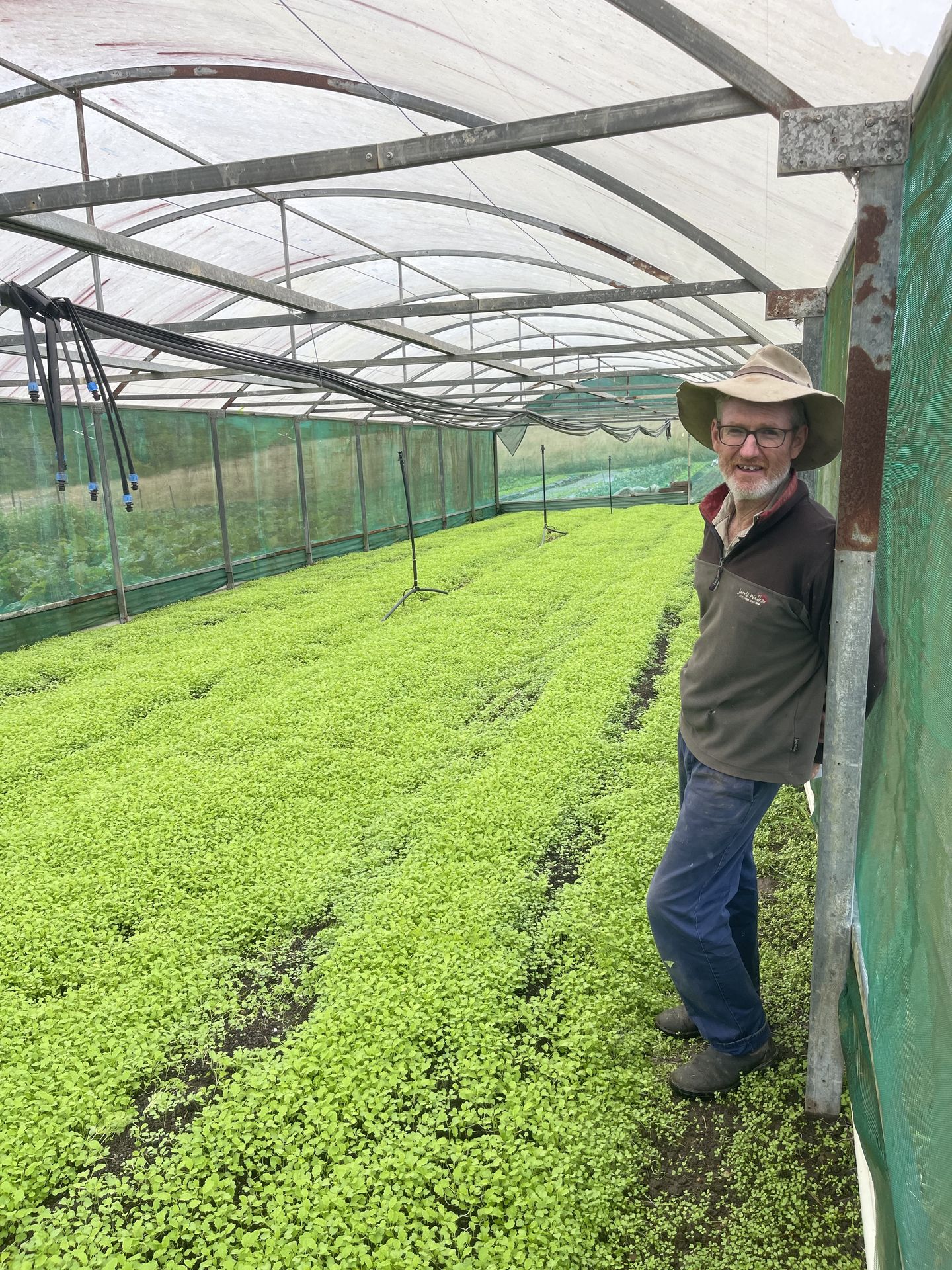
Last summer held its own horrors in our garden's polyhouses as over a thousand of our precious tomato plants wilted and died. They would grow beautifully to flowering, even setting fruit, and then over a few days would turn up their toes and expire. Devastating.
The cause was soil-borne pathogens. We are not sure exactly who was responsible, but the visual evidence strongly points toward Fusarium.
Fusarium fungi live in the soil and can survive for many years without a host. The fungus enters through the roots and builds up in the plant's vascular tissue as it spreads through the root, stem, and branches. This causes blockage of the vascular tissues so the plants cannot take up water and nutrients adequately, resulting in yellowing, wilting and finally death of the above ground plant parts.
To my knowledge there is no way to eradicate fusarium completely from a garden once it is established. Commercial growers sometimes resort to using fumigants such as the toxic methyl sodium, that kills every living thing in the soil, in an attempt to reduce the level of fusarium in the soil so they can grow a crop, but it will not go away.
This coming summer, in an attempt to avoid repeating last season's disaster, we are aiming to: 1) grow varieties of tomatoes that have been shown resistant to Fusarium, and 2) use mustard green manure crops in all of our houses to suppress it through a natural process called biofumigation.
Mustards are from the Brassicaceae family (cousins are radishes, broccoli, cabbage, etc). This is how we use them to biofumigate the soil:
- We sow brown and white mustard seed in both our garden beds and the paths in between, and lightly cover with soil by raking. Mustard grows quickly and tolerates cooler weather, perfect for us at this time of year.
- After 6-10 weeks growth, at early flowering, we mow the crop. This is when a chemical called glucosinolate is at its peak in the plants, and when we mow, the glucosinolates break down into isothiocyanates - volatile compounds toxic to many soil-borne pathogens including Fusarium and its cousins Rhizoctonia, Verticillium, Phytophthora, Pythium, and Sclerotinia.
- We then immediately incorporate the pulverized plant matter into moist soil, then cover with one of our plastic tarps for 1-2 weeks to trap the gases in the soil profile.
- We hope to time this so we are ready to plant 2-4 weeks later, once the gases have done their job and dissipated.
You will know that our efforts have been successful if you see boxes and boxes of tomatoes at the market come November!
Continue reading: Biofumigant Update - Part 2