
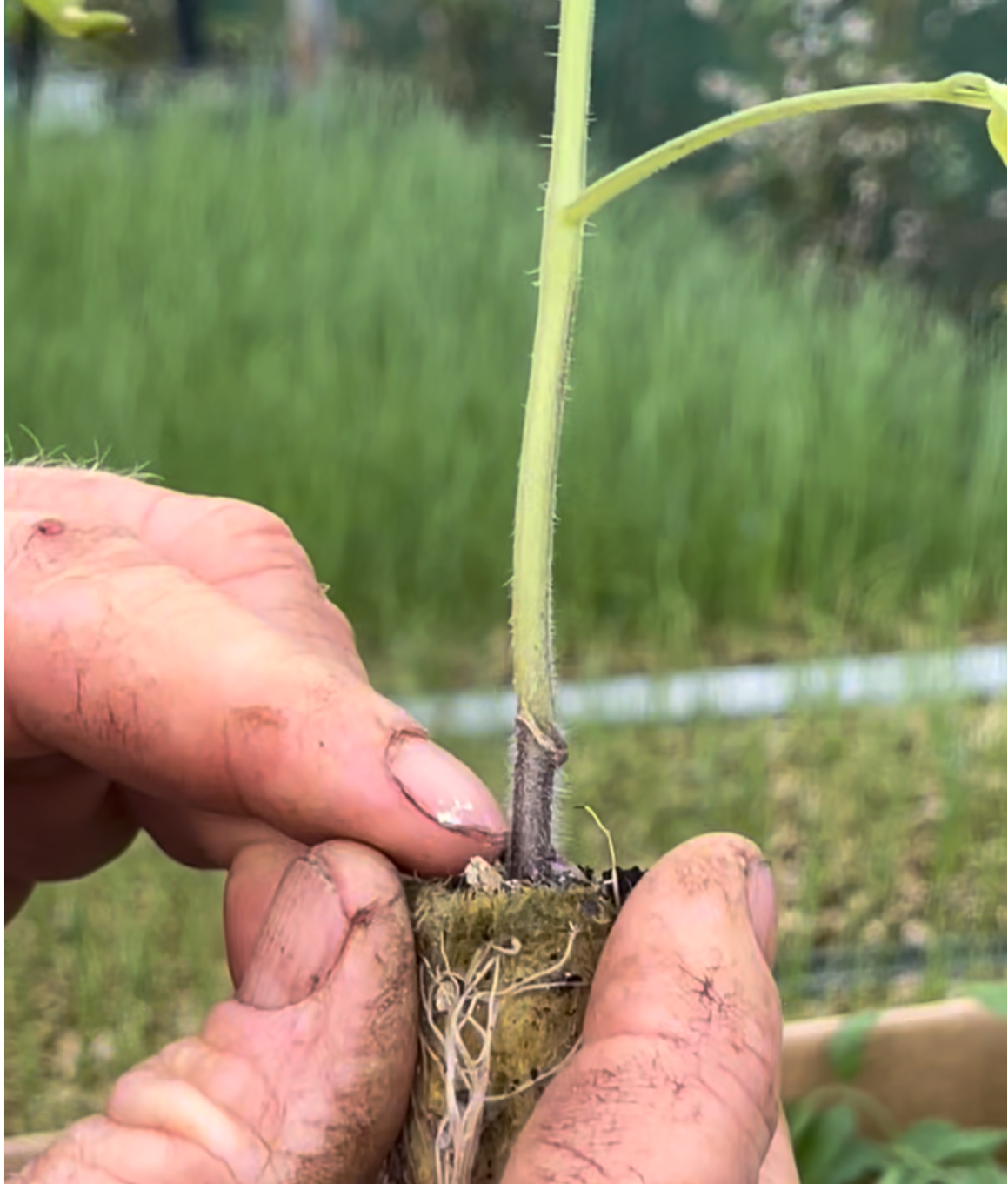
Grafting vegetables sounds like a modern horticultural technique, but it is an ancient art. The earliest written records of vegetable grafting date back to 1st century BC China, and the technique spread through Asia over centuries as a way to improve plant production, reduce disease susceptibility, and increase plant vigour. Today it is standard practice among growers worldwide, and it's something we've embraced here at Homegrown Organics as one way to avoid repeating our soil borne fungal disasters of last summer.
Here's how it works: the top of the plant is the desirable variety to eat - our flavoursome tomatoes or silky eggplants - which is joined or grafted onto the roots of a completely different, more robust plant. The result combines the best of both - exceptional flavour and fruit quality from the top, extraordinary strength and resilience from the rootstock below. Think of it as Mum & Dad passing on their strengths to their children (and hopefully not their weaknesses!)
We outsourced the grafting to Provenance Propagation up near Grafton, who grafted our chosen varieties of yummy tomatoes and eggplants onto Maxifort rootstock, specifically developed for tomato and eggplant varieties that need extra stamina and disease protection. Even under extreme conditions, Maxifort delivers added vigour, resulting in heavier fruit with consistent weight right through the season.
Even more importantly for us, Maxifort carries high resistance to the soil borne fungal disease Fusarium that devastated our tomato and eggplant crops last summer. It also provides protection against tomato mosaic virus and Verticillium wilt that can also smash crops in the mid-north coast's warm, humid summers. Along with our mustard green manure crops and the other changes we have made to our summer crops growing culture, we hope this makes a real difference.
So what does this POTENTIALLY mean for us, and for you? For us, it means less wasted time, money and heartbreak - no more pouring wages and weeks into planting and replanting crops only to watch them collapse to disease. That's stress and discouragement we're optimistically relieved to put behind us, and it makes for a far more sustainable way for us to farm going forward. For you, it means an abundance of the high-quality tomatoes and eggplants you love, for longer through the season - better fruit, more consistent supply right through the season (hopefully well into next autumn), grown with every advantage a plant can have, without compromising on our organic principles or the integrity of that flavour.
That's the plan. Let's see how the season develops....
Rod