
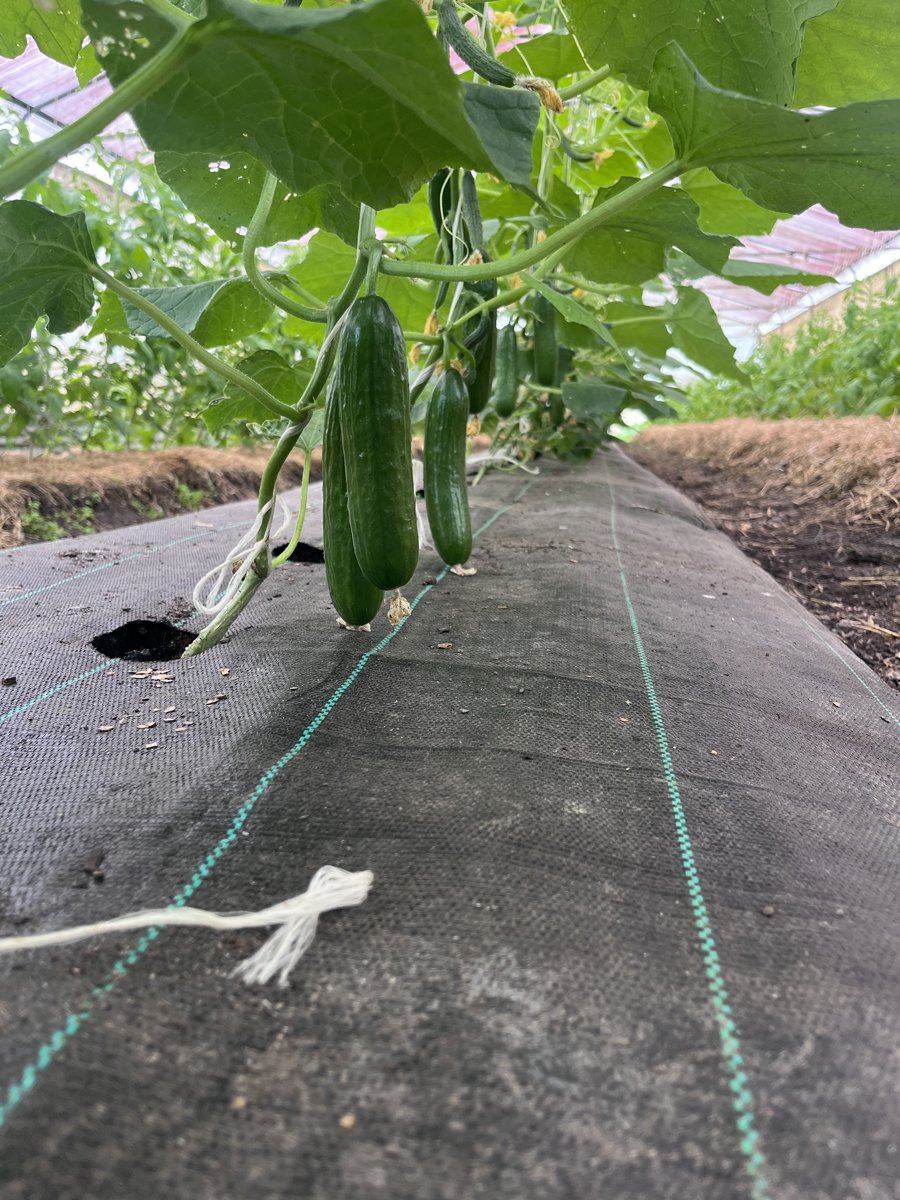
It's cool in your hand even on a hot day. It smells like a garden should. And if one of your kids is alongside you, watch their face as they crunch into it! That moment of “We grew this Mum!” is more than reward for any investment and effort you make in your garden, and just may subtly set them on a new path.
Lebanese cucumbers are one of the most satisfying things you can grow on the mid-north coast, and one of the most forgiving if you know a few basics.
Get your timing right. Transplanting lebo seedlings in September/October and then again in February/March are your sweet spots. The plants will happily grow through summer, but the heat and humidity of mid summer can make seedlings struggle.
Trellis them. Always. In our climate, keeping foliage off the ground isn't just tidy, it's your first step to keep fungal disease at bay. Get them growing upward and the improved airflow will do a lot of the disease prevention work for you, and will reduce the splash-back of soil-borne pathogens onto lower foliage. A simple wire trellis using a few star pickets, or a single overhead wire or other support with the plants trained up a string will do the trick. The fruit will also be up off the ground, making them less susceptible to rotting and pests, and within easy reach for harvest.
Water at the roots, not the leaves. This one trips people up more than anything. Wet leaves plus humid nights equals mildew, and once it takes hold it moves fast. You may need to separate your cuc’s from other crops if you water those with a sprinkler. Water in the morning, at the roots, not on the leaves. Ideally grow your summer crops including cucumbers under some plastic to keep rain off their leaves -a small simple poly house will repay your investment in a single season through dramatically less disease and much greater productivity.
Stay ahead of powdery mildew. Even with trellising and keeping water off the leaves, in our mid-north coast humidity, powdery mildew on cucumbers is a matter of when, not if. Prevention is far more effective than treatment. Part of this can be a weekly or fortnightly preventative spray of diluted potassium bicarbonate (1 teaspoon per litre of water with a drop of dish soap or similar as a sticker/spreader) from the time plants reach 30cm tall will buy you weeks of extra production compared to waiting for the first white patches of mildew to appear. Some home gardeners swear by milk sprays - may be worth a try if you’re curious.
Pick them young. Fifteen centimeters is your target - smooth, thin-skinned, sweet. Leave them too long on the vine and they go seedy and bitter within days in summer heat. More importantly, a plant carrying mature fruit thinks its reproductive job is done and will slow production. Pick daily, or at least every second day, and it will just keep going. And another tip - ideally pick them in the morning when they are fully hydrated, and store them in an airtight container in the fridge to slow down their loss of water through their delicate thin skin.
Feed them potassium once they start flowering. Comfrey tea, compost tea, seaweed, wood ash water, potassium sulphate - whatever you've got that is rich in K. Lots of potassium goes into each fruit you harvest, so supplement during the fruiting period to improve plant health, fruit quality, and to help the plant handle the heat.
And if you're able to choose the variety you grow, look for parthenocarpic types, a fancy word for self-pollinating. With our lack of wild bees due to varroa mite, and weeks like this one when any bees that are around will not be flying as much, self pollinating varieties are a huge bonus.
Grow lebo cucumbers well once, and you'll grow them every season. There's a reason cucumbers are a staple in almost every culture on earth - they're generous, they're fast, there are few things more refreshing and satisfying, and nothing beats them fresh off the vine.
And even better when you take one mouthful of cucumber, and then one mouthful of a sweet succulent homegrown tomato! Tips on growing your own tomatoes coming soon…
Rod