
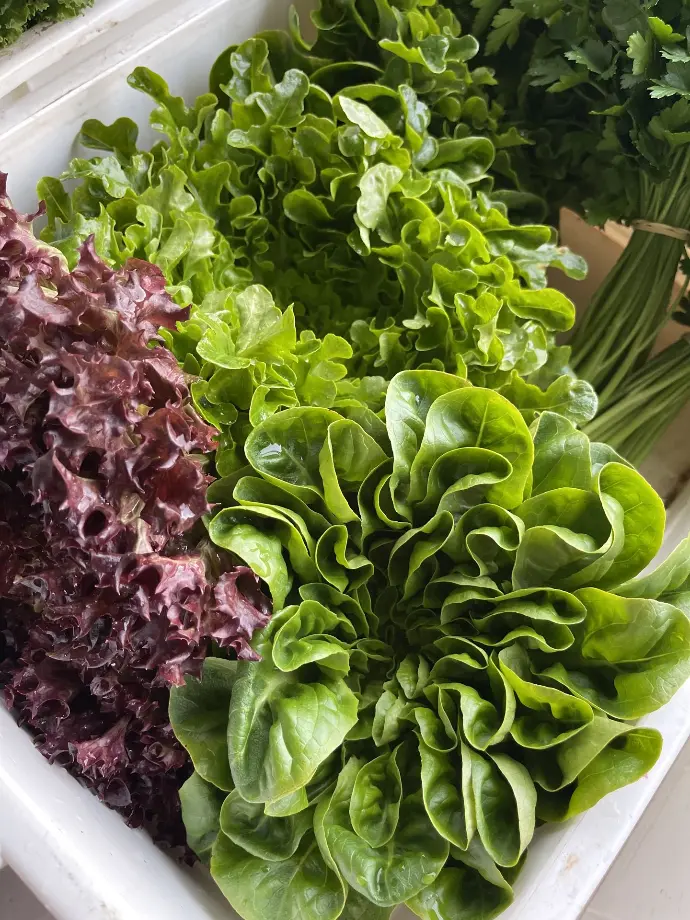
The last couple of months we have been adding compost to all of our beds as we “turn them over” - remove a finished crop and prepare the bed for the next one. And the benefits are there for everyone to see in our lettuce. Those planted in the compost have caught up to and passed those planted 2 weeks earlier! And they are beautiful!
We gardeners tend to focus on what we can see - lush green leaves, fat red tomatoes, tall corn. But the most important thing happening in our gardens are completely invisible to our eyes, but happening right beneath our feet, and compost is it's best friend.
Your soil, when it's healthy, is absolutely teeming with life. We're talking bacteria, fungi, protozoa, nematodes, and a cast of microscopic thousands, all going about their business in a complex, interdependent community that we call the soil food web. A single teaspoon of good compost-enriched soil can contain more microorganisms than there are people on Earth. What?!
So what are all these tiny creatures actually doing for our veggies?
Bacteria and fungi are the decomposers. They break down organic matter (like compost) into simpler compounds, releasing nutrients like nitrogen, phosphorus and potassium in forms that plant roots can actually absorb. Without them, those nutrients just sit there, locked up and unavailable, no matter how much you've added to your beds.
Then there are the mycorrhizal fungi. These guys are the real rock stars of the soil world. They form an intimate partnership with plant roots, extending their reach enormously through thread-like structures called hyphae, effectively giving your plants a vastly expanded root system. In return for sugars from the plant, mycorrhizal fungi deliver water and minerals (particularly phosphorus) that the plant simply couldn't access on its own. Plants with thriving mycorrhizal partnerships are more drought tolerant, more disease resistant, and more productive. It's a genuine win-win.
Compost feeds and sustains all of this microbial activity. It provides organic carbon, the energy source that drives the whole system, along with a diversity of nutrients and the physical structure that soil microbes need to thrive. Bare soil, or soil that's been over-tilled, is a much poorer environment for these communities. Compost builds them back up.
This is why, when we add compost to our beds each season, we're not just feeding the plants, we're feeding the soil that feeds the plants. It's a longer game, and a more rewarding one. Healthy soil biology means less inputs, better water retention, stronger plants, and tastier vegies.
Hope you enjoy our yummy lettuce this week!