
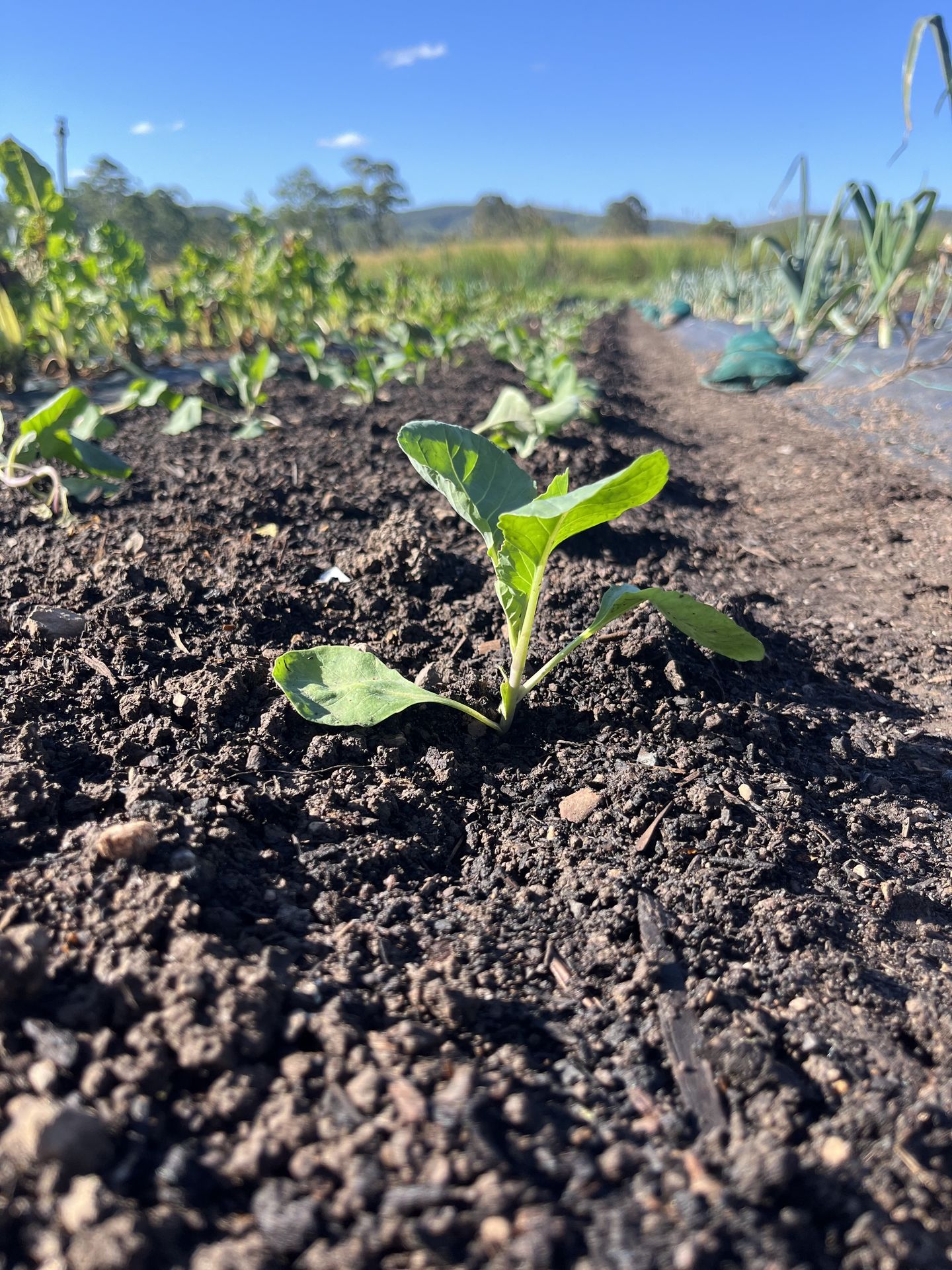
Some rain is good, but when we experience protracted rain, we quickly get behind in our work program.
The major tasks that are affected (other than our attitudes) are: preparing beds for new crops to be planted into, and cultivating the beds to manage weeds. One results in less crops to harvest down the track, and the other is a weedy garden that sucks our time when we can finally get around to dealing with them.
Our problem is soil that is too wet.
Working our heavy soil when it is too wet quickly damages its structure, and this damage can take years to undo. So, unless we get really desperate, we have to wait til the soil dries out before we prep beds or cultivate the weeds.
Here's what's actually happening structurally to the soil when we work it too wet:
Our aggregates get messed up. Good soil isn't just particles of dirt, it is soil particles bound into aggregates (clumps or crumbs) by biological glues. These glues are made from fungal hyphae, root exudates, microbial polysaccharides, and organic matter. In between the aggregates are pore spaces that let air, water and roots move through the soil profile. This structure is fragile and takes years to build, but can be destroyed in an afternoon.
Compaction. When soil is wet, the water film between soil particles acts as a lubricant. Clay particles, instead of staying bound into stable aggregates, slide past each other and pack tightly together under the weight of our boots, tools, or machinery. This collapses the large pores that normally hold air and allow drainage and root penetration, leaving a denser, more uniform mass. A broad acre farming friend told me repeated 600mm deep ripping has not remedied compaction caused by working and driving on his paddocks when too wet. Not good.
Smearing. Cultivating wet clay soils doesn't cut and turn it cleanly, leaving aggregates largely intact like when it is drier - it smears. The shear force remoulds the clay platelets so they align in flat, dense layers. This is why potters use wet clay - it is plastic and mouldable, which is great for a potter but terrible for the gardener. This action creates a "puddled" layer on the surface and deeper that can become almost impermeable when it dries. This does not happen on lighter sandy soils with low plasticity, so structural damage from wet working is minor and self-healing there.
Loss of biological glue and pore continuity. Aggregate stability depends on fungal hyphae networks and microbial gums staying intact. Smearing physically shears these networks apart. You don't just lose the physical pore structure, you destroy the biological infrastructure that would otherwise rebuild it. Worm channels and root channels, which are some of the best natural drainage and aeration pathways, also get collapsed.
Anaerobic conditions. Once the pores between the aggregates are gone, oxygen diffusion into the soil drops sharply. This shifts the microbial community toward anaerobic organisms, which can produce phytotoxic compounds like organic acids and even hydrogen sulfide, and slows nutrient cycling, particularly nitrogen, which can be lost rather than made available to plants.
Clodding on drying. The final insult. When compacted and smeared wet clay dries out, it doesn't return to crumbs, it sets like concrete into large, hard clods. Breaking these back down into a workable tilth often requires repeated freeze-thaw or wet-dry cycles, or mechanical force that itself risks further damage. On heavy soils like ours this can take a year or more.
A healthy soil is the key to both nutritious veggies and profitability, so we do whatever we can to avoid this damage - and sometimes that means we have gaps in our crops. Sorry! It's the better option to destroying our soil structure.