
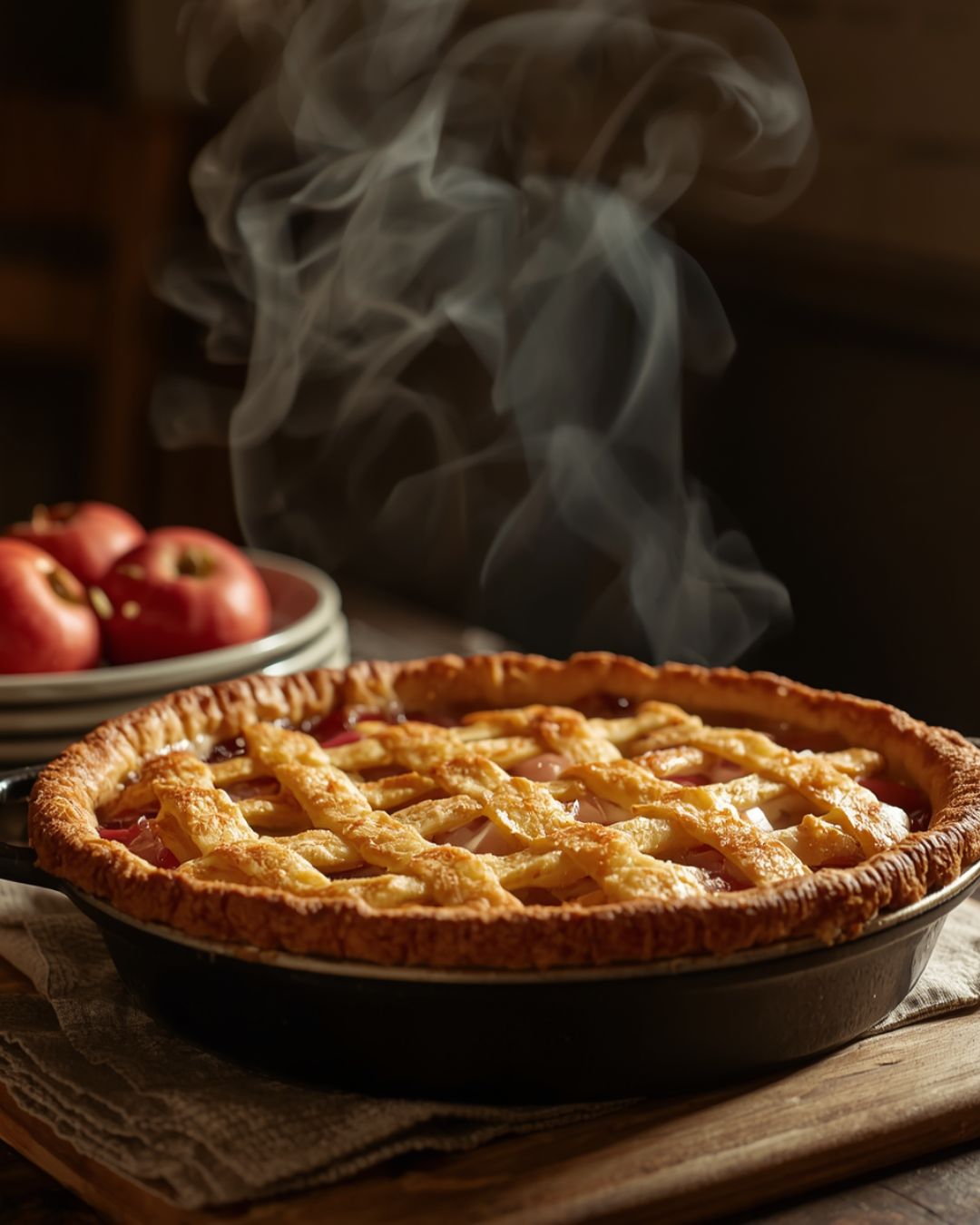
There's something that happens the moment rhubarb pie comes out of the oven - the kitchen fills with that tart-sweet odour, and suddenly you're eight years old again.
Maybe earlier you were sent out to Grandma's garden to bring back the reddest, fattest stalks you could find, and now there's an apple and rhubarb pie cooling on the table, and the whole kitchen smells like heaven.
Rhubarb has been earning its keep in backyard gardens for over 2,000 years. Prized first in ancient China, where the roots were used as medicine to aid digestion and support the liver, and traded along the Silk Road, it didn't become a culinary success in Europe and the new world until sugar got cheap enough in the 1700s to tame that signature tartness.
Once it did, it quickly grew in popularity, earning the nickname "pie plant". You can still read about it under that name in old farm almanacs, including this mention in a mother's 1881 letter to a faraway son:
"Father has excellent health. He has worked hard on the place here; put in more than one acre of strawberries, some raspberries, more than an acre of potatoes, several acres of corn, fifty hard maples, many peach trees, pear trees, and two long rows of pie plant." Obviously back when men were men!
Right now, after a tough summer, our rhubarb patch here on the farm is doing what rhubarb does best: quietly recovering, getting stronger with the cooler weather, and preparing to come back better than ever.
Soon those bright red stalks will be back - sweet, tart, and grown the way your grandmother would have recognised.
The best food connects you to a memory or something meaningful. We can't wait to help you find that again.