
Back in May we wrote about the soil-borne pathogens that devastated our precious tomato crop last summer, and how we were taking steps to avoid repeating that again: 1) grow varieties with resistance to Fusarium, 2) graft our favourite tomato varieties onto rootstock with resistance to Fusarium, and 3) use mustard green crops to suppress the Fusarium through a natural process called biofumigation.
Steps 1 & 2 are happening, with some of our tomato seedlings doing well in Wendy's seedling house, and the rest thriving at Provenance Propagation up at Wells Crossing near Grafton, where they have been grafted onto Maxifort rootstock. We expect to take delivery of them in the next few weeks, ready for transplanting.
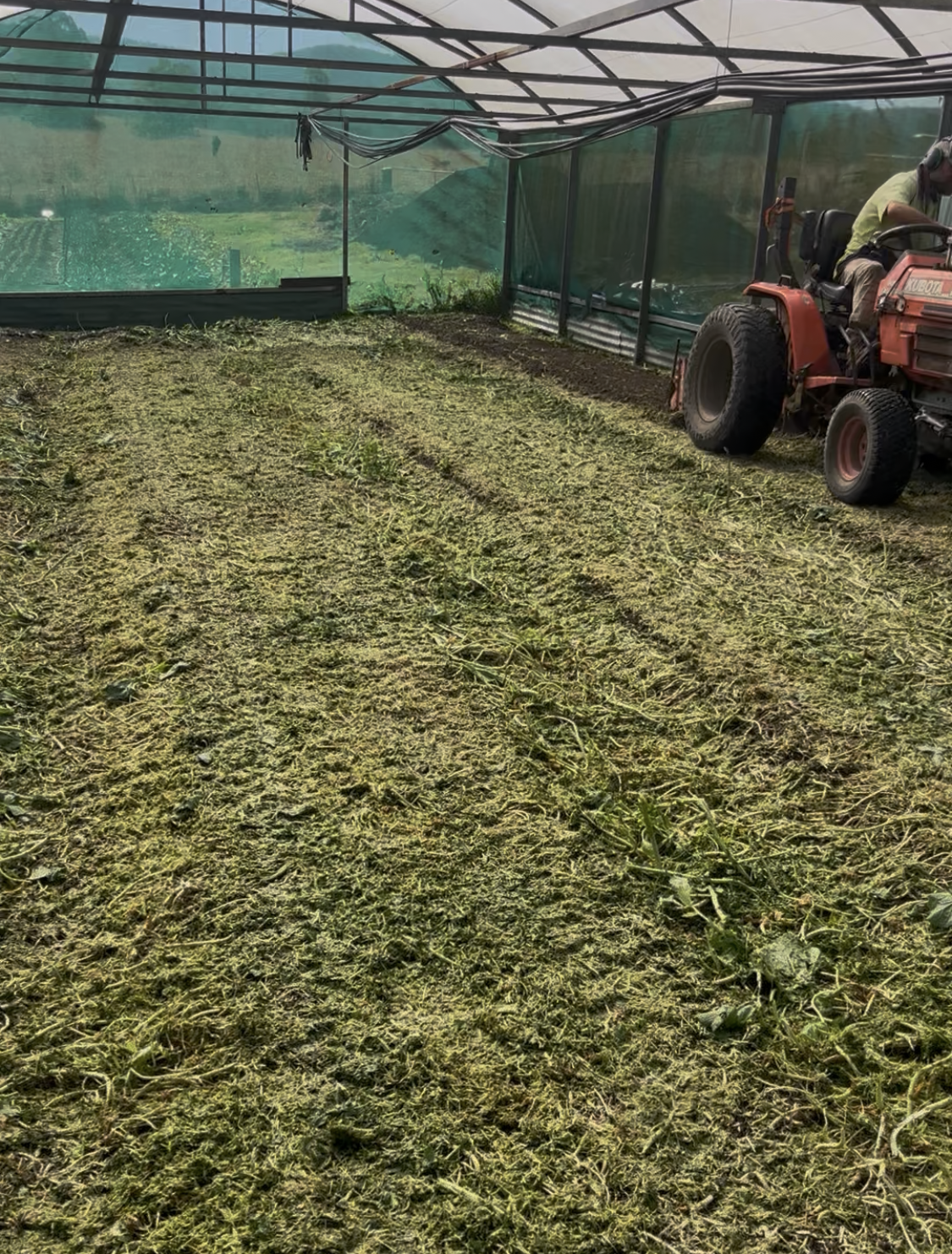
And Step 3 is progressing well. After reaching about thigh high before they began to flower, we recently mowed then hoed the mustard greens in the Treehouse, Polyhouse and Playhouse into the soil, and covered with plastic tarps. As we described last time, the glucosinolates released by the decaying plants break down into isothiocyanates, volatile compounds toxic to many soil-borne pathogens including Fusarium and its cousins Rhizoctonia, Verticillium, Phytophthora, Pythium, and Sclerotinia. When these compounds have done their job in a few weeks, we'll form the beds and get planting those tomatoes!
Once again, you'll know that our efforts have been successful if you see boxes and boxes of tomatoes at the market come November!